Indication
VYLOY™ (zolbetuximab), in combination with fluoropyrimidine- and platinum-containing chemotherapy, is indicated for the first-line treatment of adult patients with locally advanced unresectable or metastatic HER2-negative gastric or gastro-oesophageal junction (GEJ) adenocarcinoma whose tumours are Claudin (CLDN) 18.2 positive
SAFETY PROFILE
The safety of VYLOY was evaluated in two Phase 2 studies (FAST, ILUSTRO) and two Phase 3 studies (SPOTLIGHT, GLOW) in 631 patients who received at least one dose of VYLOY 800 mg/m2 as a loading dose followed by 600 mg/m2 subsequent doses every 3 weeks in combination with fluoropyrimidine and platinum-containing chemotherapy. The median duration of exposure to zolbetuximab was 171 days (range: 1 to 1,791 days).
Adverse reactions observed during clinical studies

Frequency categories are defined as follows: Very common (≥1/10); common (≥1/100 to <1/10); uncommon (≥1/1,000 to <1/100); rare (≥1/10,000 to <1/1,000); very rare (<1/10,000).
Contraindications
Interaction with other medicinal products and other forms of interaction
Fertility, pregnancy and lactation
Traceability
WARNINGS AND PRECAUTIONS
HYPERSENSITIVITY REACTIONS
Special warnings and precautions for use
INFUSION-RELATED REACTION (IRR)
Special warnings and precautions for use
NAUSEA AND VOMITING
Special warnings and precautions for use
Refer to the Summary of Product Characteristics for the full safety profile of VYLOY.
For optimal viewing, please use a desktop or laptop computer. Prescribing information links can be found at the top of the page. Adverse event reporting can be found at the bottom of the page.

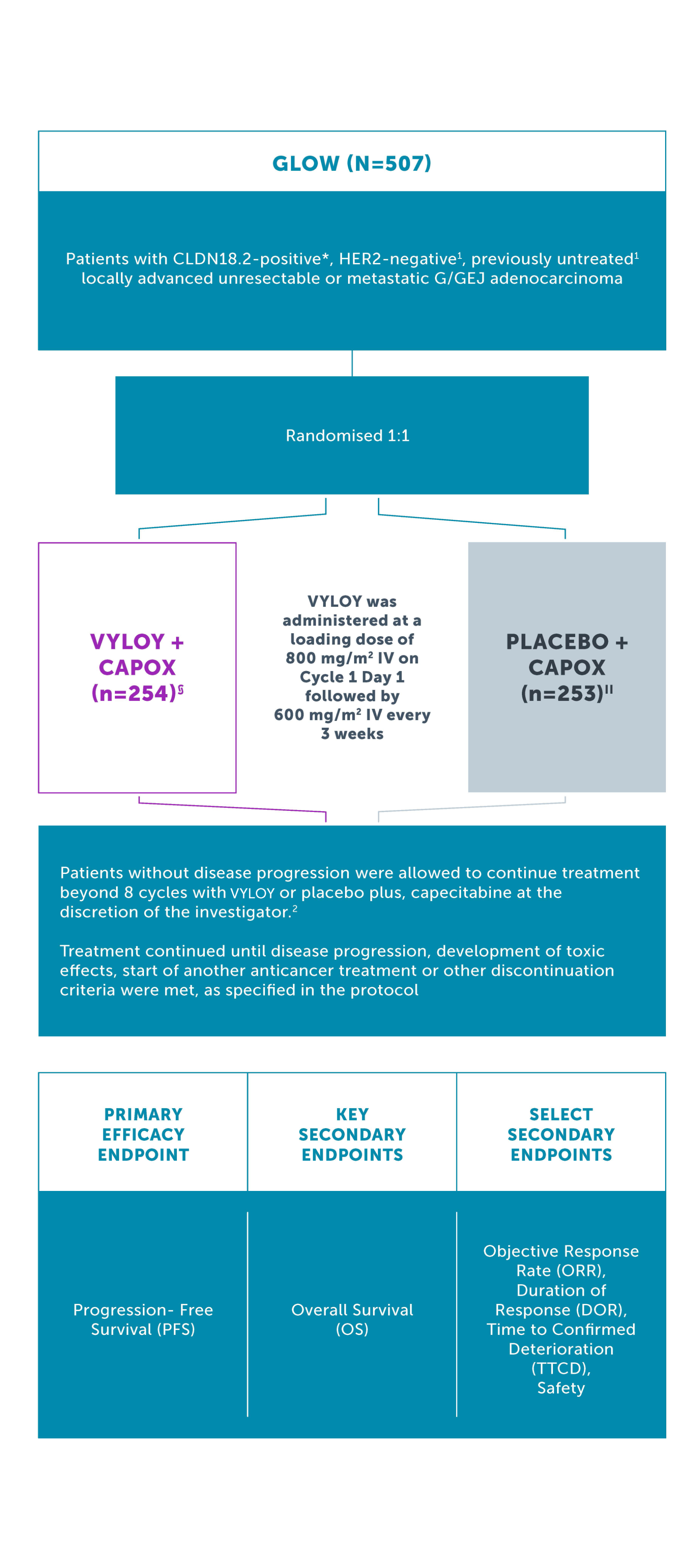
*Tumour expresses CLDN18.2 in ≥75% of tumour cells demonstrating moderate to strong membranous staining as determined by central IHC testing.2
†HER2-negative tumour as determined by local or central testing on a gastric or GEJ tumour specimen.2
‡No prior systemic chemotherapy. Subject may have received other systemic anti-cancer treatments as long as they were completed 6 months prior to randomisation.2
§VYLOY was administered at a loading dose of 800 mg/m2 IV on Cycle 1 Day 1 followed by 600 mg/m2 IV every 3 weeks. Patients received either VYLOY or placebo and CAPOX (capecitabine/oxaliplatin) treatment for a total of 8 cycles (21 days per cycle) until IRC confirmed disease progression. Oxaliplatin was administered on Day 1 of each cycle, whereas capecitabine was taken twice daily on Days 1 through 14. After a maximum of 8 cycles of treatment, patients continued to receive capecitabine twice daily on Days 1 through 14 of each cycle at the investigator’s discretion until disease progression, development of toxic effects, start of another anti-cancer treatment or other discontinuation criteria were met, as specified in the protocol.1,2
||Placebo was administered on Cycle 1 Day 1 and every 3 weeks thereafter.1,2
¶For the full eligibility and exclusion criteria, please refer to the Shah MA et al, 2023 study.
**Congestive heart failure (defined as New York Heart Association Class III or IV), myocardial infarction, unstable angina, coronary angioplasty, coronary stenting, coronary artery bypass graft, cerebrovascular accident or hypertensive crisis within 6 months before randomisation.2
CAPOX=capecitabine/oxaliplatin; CLDN18.1=Claudin 18.2; CNS=central nervous system; ECOG=Eastern Cooperative Oncology Group; G/GEJ=gastric/gastro-oesophageal junction; HER2=human epidermal growth factor receptor 2; HIV=human immunodeficiency virus; IHC=immunohistochemistry; IRC=independent review committee.
Median PFS was 8.2 months with VYLOY + CAPOX vs 6.8 months with placebo + CAPOX (HR=0.69 [95% CI: 0.54–0.87]; P=0.0014)1

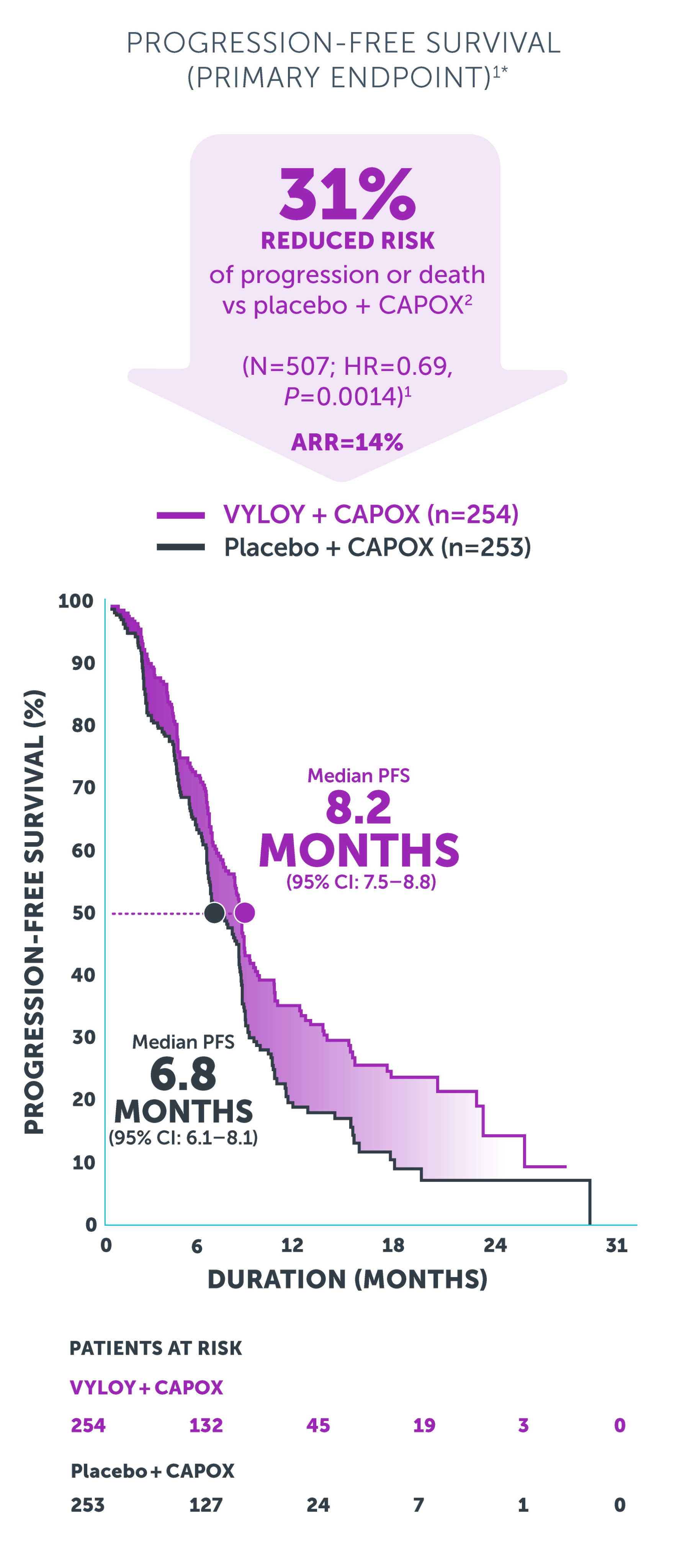
*Per RECIST version 1.1 as determined by independent review committee in full analysis set.1
†2-sided p-value based on 2-sided log-rank test.1
ARR=absolute risk reduction; CAPOX=capecitabine/oxaliplatin; CI=confidence interval; HR=hazard ratio; RECIST=Response Evaluation Criteria in Solid Tumours.
Median OS was 14.4 months with VYLOY + CAPOX vs 12.2 months with placebo + CAPOX (HR=0.77 [95% CI: 0.62–0.97]; P=0.0236).1

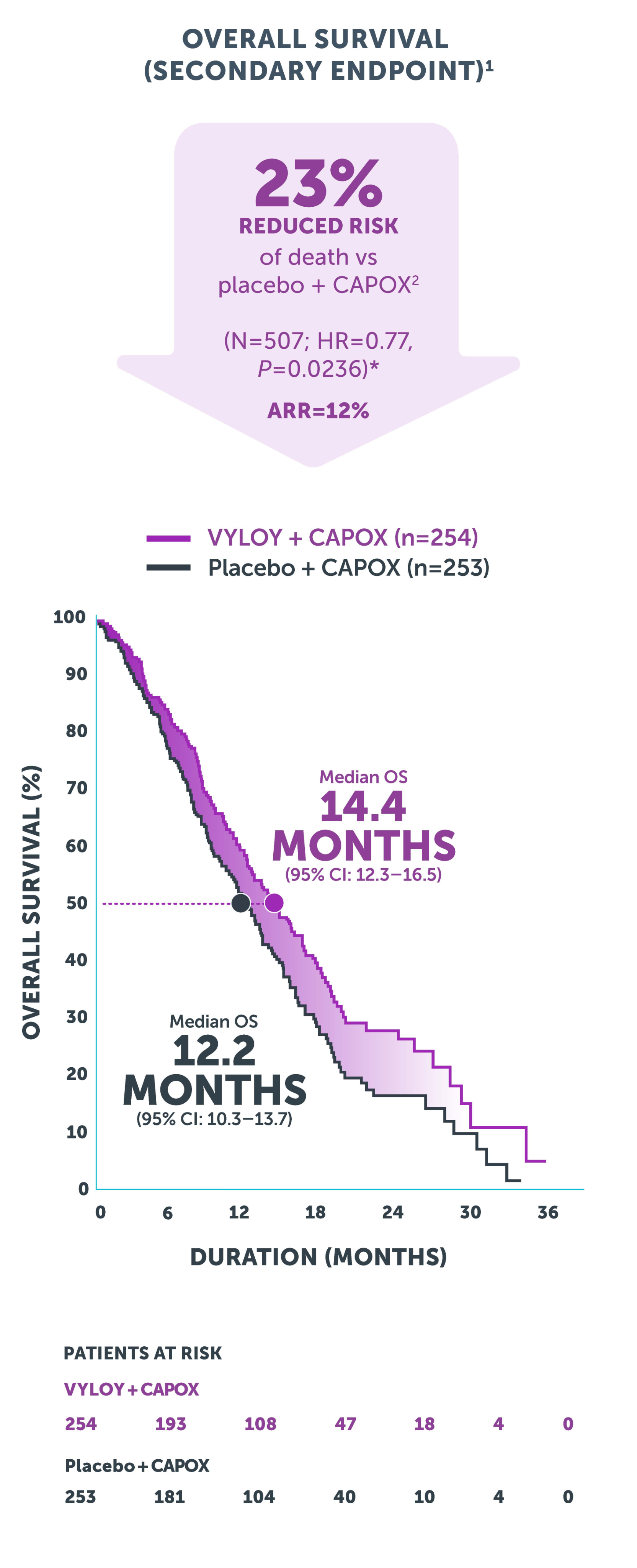
*2-sided p-value based on 2-sided log-rank test.1
ARR=absolute risk reduction; CAPOX=capecitabine/oxaliplatin; CI=confidence interval.
Complete response was 3.5% with VYLOY + CAPOX (n=9) vs 2.0% with placebo + CAPOX (n=5).2


Median duration of response was 6 months with VYLOY + CAPOX vs 6 months with placebo + CAPOX.2


*Per RECIST version 1.1 as determined by independent review committee in full analysis set.2
CAPOX=capecitabine/oxaliplatin; CI=confidence interval; CR=complete response; PR=partial response; RECIST=Response Evaluation Criteria in Solid Tumours.
Demographic and baseline characteristics were generally well balanced between groups.2
Adapted from VYLOY Summary of Product Characteristics and Shah et al, 2023.
CAPOX=capecitabine/oxaliplatin; ECOG=Eastern Cooperative Oncology Group.
Adverse reactions reported in ≥10% of patients (any grade)2*
Refer to the Summary of Product Characteristics for the full safety profile of VYLOY.
*Grades 3 to 5 include serious, life-threatening and fatal adverse events.2
CAPOX=capecitabine/oxaliplatin; TEAE=treatment-emergent adverse event.
CLDN18.2=Claudin 18.2; IHC=immunohistochemistry.
| Adverse events should be reported. Reporting forms and information can be found at www.mhra.gov.uk/yellowcard or search for MHRA Yellow Card in the Google Play or Apple App Store. Adverse events should also be reported to Astellas Pharma Ltd. on 0800 783 5018. |
The above link will take you to a non-Astellas website. Astellas does not endorse or accept liability for sites controlled by third-parties.
References:
MAT-GB-ZOL-2026-00005 | Date of preparation: July 2026
Indication
Important Safety Information
Indication
VYLOY, in combination with fluoropyrimidine- and platinum-containing chemotherapy, is indicated for the first-line treatment of adult patients with locally advanced unresectable or metastatic human epidermal growth factor receptor 2 (HER2)-negative gastric or gastro-oesophageal junction (GEJ) adenocarcinoma whose tumours are Claudin (CLDN) 18.2 positive.
SAFETY PROFILE
The safety of VYLOY was evaluated in two Phase 2 studies (FAST, ILUSTRO) and two Phase 3 studies (SPOTLIGHT, GLOW) in 631 patients who received at least one dose of VYLOY 800 mg/m2 as a loading dose followed by 600 mg/m2 subsequent doses every 3 weeks in combination with fluoropyrimidine- and platinum-containing chemotherapy. The median duration of exposure to zolbetuximab was 174 days (range: 1 to 1,791 days).
Serious adverse events occurred in 45% of patients treated with VYLOY and/or fluoropyrimidine- and platinum‑containing chemotherapy. The most common serious adverse reactions (≥2%) were vomiting (6.8%) and nausea (4.9%).
Adverse reactions observed during clinical studies
Frequency categories are defined as follows: Very common (≥1/10); common (≥1/100 to <1/10); uncommon (≥1/1,000 to <1/100); rare (≥1/10,000 to <1/1,000); very rare (<1/10,000).
Contraindications
Interaction with other medicinal products and other forms of interaction
Fertility, pregnancy and lactation
Traceability
WARNINGS AND PRECAUTIONS
HYPERSENSITIVITY REACTIONS
Special warnings and precautions for use
INFUSION-RELATED REACTION (IRR)
Special warnings and precautions for use
NAUSEA AND VOMITING
Special warnings and precautions for use
Refer to the Summary of Product Characteristics for the full safety profile of VYLOY.